Connected and Uncompromised: How Broadband Expansion Is Turning Lane Addresses into Tech-Ready Sanctuaries

For most of the past decade, the phrase "work from anywhere" carried an unspoken asterisk. Professionals in software engineering, data science, digital marketing, and financial technology understood the freedom the remote model promised — but they also understood its practical ceiling. Reliable, high-speed internet was not a given outside of densely developed corridors, and the romantic notion of working from a quiet rural address often collapsed the moment a video call stuttered or a file upload stalled mid-transfer.
That ceiling is rising — and in many markets, it has been removed entirely.
A convergence of federal investment, private infrastructure buildout, and 5G network expansion has fundamentally altered the connectivity landscape for properties once considered beyond the reach of serious broadband service. For buyers weighing addresses like 18 Hicks Lane, this shift is not a minor footnote. It is a structural change that repositions the lane property as a legitimate, well-equipped alternative to suburban tech corridors — and in several meaningful respects, a superior one.
The Infrastructure Moment That Changed the Equation
The federal government's commitment to rural broadband access — accelerated through the Infrastructure Investment and Jobs Act and subsequent USDA ReConnect Program funding — has directed billions of dollars toward underserved communities across the United States. Fiber-optic lines that once terminated at the edge of suburban development are now being extended into rural townships, unincorporated areas, and the kinds of quiet residential lanes that previously relied on satellite or DSL connections of marginal quality.
Meanwhile, fixed wireless access providers and regional internet service companies have expanded aggressively into low-density markets, offering symmetrical upload and download speeds that satisfy the demands of enterprise-grade remote work. Speeds of 100 Mbps to 1 Gbps are now achievable at addresses that, five years ago, struggled to maintain a stable 25 Mbps connection.
For a software engineer conducting daily code reviews, a product manager running distributed team standups, or a financial analyst transmitting large data sets, these figures are not abstract. They represent the difference between a workday that functions and one that fragments.
Why Tech Professionals Are Choosing the Lane
The migration is not hypothetical. Real estate professionals serving rural and semi-rural markets have observed a measurable uptick in inquiries from buyers who identify themselves as remote technology workers. Their criteria are precise: verified broadband availability, dedicated home office space, a low-traffic setting that supports sustained concentration, and a cost-of-living profile that compares favorably to the metropolitan areas from which they are departing.
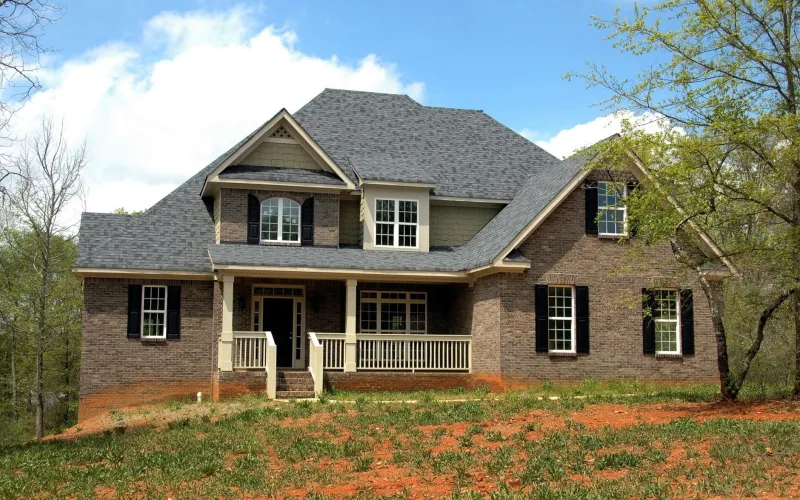
Consider the profile of a senior software developer earning a San Francisco-indexed salary while working remotely for a distributed company. In a major coastal metro, that income purchases a modest condominium with shared walls, urban noise, and property taxes calibrated to a market inflated by local demand. Directed toward an address like 18 Hicks Lane, the same income acquires significantly more: acreage, architectural character, genuine privacy, and a monthly cost structure that allows for meaningful wealth accumulation rather than mere housing consumption.
The appeal is not purely financial. Remote technology professionals — particularly those who have spent years in open-plan offices and dense urban environments — place considerable value on the cognitive benefits of a quieter setting. Research consistently links noise reduction and access to natural surroundings with improved focus, reduced stress markers, and higher creative output. A lane address, with its limited traffic, mature tree cover, and distance from commercial density, provides precisely this environment.
Connectivity as a Property Attribute
Savvy buyers in this segment have begun treating broadband access as a property attribute in the same category as square footage or school district quality. Before submitting an offer, they conduct due diligence that includes direct conversations with internet service providers, speed test verification at the address, and, in some cases, consultation with local network engineers about planned infrastructure upgrades in the area.
For sellers and listing agents, this shift carries a direct implication: documented, verified connectivity is now a marketing asset. A property that can demonstrate gigabit-capable service — whether through fiber, fixed wireless, or a combination of redundant providers — commands attention from a buyer pool that is both financially qualified and highly motivated to leave metropolitan markets.
At 18 Hicks Lane, the surrounding region has benefited from recent infrastructure investment that has extended high-speed service to addresses previously underserved. Buyers with connectivity requirements should conduct independent verification, but the directional trend is clear: the gap between urban and rural internet access is narrowing with each passing year.
The Redundancy Advantage
One aspect of lane-property connectivity that receives less attention than it deserves is redundancy. Remote professionals whose income depends on uninterrupted internet access are increasingly building backup systems into their home office infrastructure. A primary fiber connection supplemented by a fixed wireless or 5G failover — or a high-performance satellite service such as Starlink as a secondary option — creates a connectivity environment that rivals or exceeds what many suburban coworking spaces can offer.
This redundancy architecture is easier to implement in a detached, owner-controlled property than in a condominium, apartment, or townhome where building infrastructure imposes limitations. The lane property, with its dedicated electrical systems, roof access, and freedom from shared-wall constraints, gives the remote professional full authority over their connectivity setup.
The Cost Differential That Accelerates the Decision
Beyond connectivity, the economic argument for a lane address in the current remote-work environment is difficult to dismiss. In technology-sector hubs such as the San Francisco Bay Area, greater Seattle, Austin, and the Boston metro, median home prices remain elevated despite post-pandemic cooling. A buyer departing one of these markets with equity and a portable income stream arrives at a rural or semi-rural lane property with significant purchasing power — and the capacity to invest in property improvements, business infrastructure, or long-term savings that urban housing costs would have consumed.
The tax environment in many rural counties further supports this calculation. Property tax rates, combined with lower assessed values, can produce annual obligations that are a fraction of what comparable square footage would carry in a high-demand suburban ZIP code.
What This Means for the Lane Property Market
The entrance of high-earning remote professionals into markets like 18 Hicks Lane introduces a buyer profile that values the property differently than a traditional local purchaser might. These buyers are not simply seeking shelter. They are selecting a permanent operating base — a headquarters for a professional life that may generate income indefinitely without geographic constraint.
That framing elevates their willingness to invest in the property, maintain it carefully, and remain for extended periods. It also introduces competitive pressure into a category of real estate that was historically insulated from the bidding dynamics of urban markets.
For current owners considering when and how to position a lane property for sale, the emergence of this buyer class is a meaningful development. For prospective purchasers evaluating whether a quiet address can genuinely support a demanding professional life, the answer — supported by infrastructure investment, evolving technology, and the real-world choices of thousands of remote workers — is increasingly and unambiguously yes.