When Smoke Fills the Sky: How a Lane Address Can Mean the Difference Between Loss and Survival
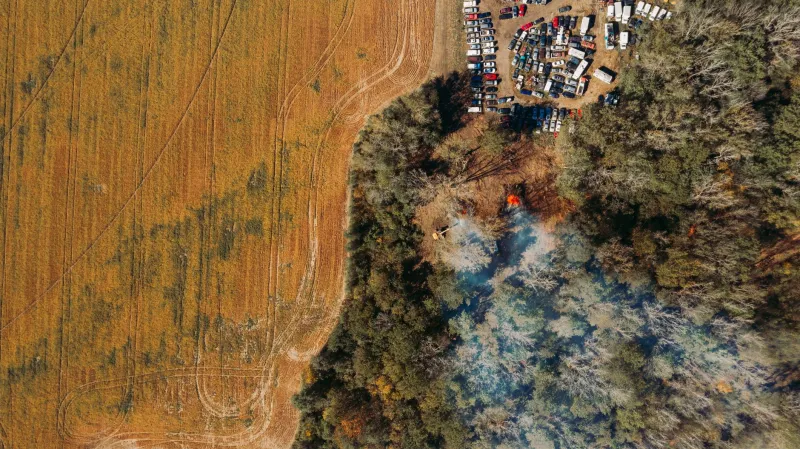
In the summer of 2023, evacuation orders swept through portions of northern California, eastern Washington, and the Texas panhandle with a speed that left many homeowners with minutes rather than hours to act. For those living on tightly packed suburban streets, the logistics of departure were compounded by gridlock, shared fencing, and structures positioned almost wall-to-wall. For residents of lane and rural addresses, the calculus was different—not without risk, but shaped by a fundamentally different relationship between property, land, and the natural environment surrounding both.
That distinction has not gone unnoticed by fire safety professionals, insurance actuaries, or the growing cohort of buyers who now factor climate resilience into their real estate decisions.
The Physics of Fire and the Value of Distance
Wildfire spreads through three primary mechanisms: direct flame contact, radiant heat, and the transport of burning embers—known as firebrands—carried by wind. Of these, ember transport is widely considered the most dangerous and least predictable. Embers can travel more than a mile ahead of an active fire front, igniting structures that have no direct flame contact whatsoever.
What this means for property owners is that defensible space—the managed buffer between a structure and the surrounding vegetation—is among the most consequential factors in survival outcomes. Lane properties, by their nature, tend to offer more of it.
"The single biggest predictor of whether a home survives a wildfire is not the construction materials alone—it's the combination of materials and the amount of managed space surrounding the structure," said one California-based fire behavior analyst who has consulted with county emergency management agencies for over two decades. "A home on a lane with an acre or more of managed land simply has more opportunity to interrupt the fire's pathway."
This is not an argument that lane addresses are automatically safe. It is, however, an argument that they offer a physical foundation that dense residential development does not.
What the Insurance Data Reveals
Insurance claims data from recent wildfire events tells a story that aligns with the spatial logic above. According to analyses published by several state insurance commissioners in the aftermath of major California and Oregon fire events, total loss rates in clustered residential zones frequently exceeded those in lower-density rural and semi-rural parcels—even when both property types fell within the same fire perimeter.
The reasons are multiple. In high-density areas, the proximity of structures to one another creates a secondary ignition dynamic: a burning home becomes an ignition source for its neighbors, independent of the original fire front. On lane properties with meaningful setbacks and separation, this cascading effect is substantially reduced.
Insurance carriers have begun pricing this reality into their models. Several major carriers now apply what they term "defensible space credits" to policies for properties that meet specific vegetation management standards. Lane homeowners who document their compliance with state or county guidelines—cleared brush zones, ember-resistant vents, non-combustible decking materials—may qualify for meaningful premium reductions.
It bears noting, however, that some insurers have retreated from high-risk fire zones entirely, regardless of property type. Buyers considering lane addresses in fire-prone regions should conduct thorough carrier research before closing, and should not assume that rural or semi-rural status alone will secure favorable coverage terms.
Evacuation Routes and the Lane Advantage
Beyond defensibility, the physical layout of a lane address carries logistical implications for evacuation that are worth examining carefully.
On one hand, a single-access lane can create a chokepoint—a genuine concern in fast-moving fire events. On the other, many lane properties are situated with secondary access options, whether through agricultural roads, adjacent parcels, or county easements that provide alternate egress when a primary route is compromised.
"We always advise homeowners on lane and rural properties to map at least two evacuation routes before fire season begins," noted one regional emergency preparedness coordinator in the Pacific Northwest. "The good news is that many of these properties already have natural advantages in terms of spacing. The challenge is ensuring that the exit strategy matches the landscape."
For prospective buyers, this means that due diligence on a lane property should include not only the standard title and inspection protocols, but a frank assessment of ingress and egress under emergency conditions. Local fire department representatives are often willing to walk a property with a buyer or owner to identify vulnerabilities and opportunities.
Practical Defensibility: What Lane Homeowners Are Actually Doing
Across fire-prone regions, lane homeowners who have invested in defensibility measures describe a consistent set of practices that go beyond the minimum standards required by most local codes.
Vegetation zonation is the foundation. The widely adopted "three-zone" model—a non-combustible zone immediately adjacent to the structure, a reduced-fuel zone extending outward, and a modified natural zone beyond that—is the framework most fire professionals recommend. Lane properties with sufficient acreage can implement all three zones without compromise.
Structural hardening is the second layer. Ember-resistant vents, multi-pane windows, Class A roofing materials, and non-combustible siding and decking represent the primary structural interventions that fire engineers recommend. Many lane homeowners are retrofitting older structures with these features as part of broader renovation projects.
Water access and storage is a consideration unique to rural and lane settings. Properties not served by municipal water systems—or those at the end of long supply lines—benefit significantly from on-site water storage, whether through dedicated tanks or ponds. Some lane homeowners in California and Oregon have installed dedicated fire suppression water supplies in coordination with their local fire districts.
Community coordination, even in the absence of a formal homeowners association, is a practice that lane communities have increasingly embraced. Neighboring lane property owners who share information about vegetation management, road conditions, and emergency contacts create a resilience network that no individual measure can replicate.
Regional Variation and the Limits of Generalization
It would be imprecise to suggest that a lane address confers uniform wildfire advantages across all American geographies. The fire ecology of the California chaparral is fundamentally different from that of the Florida scrub, the Texas Hill Country, or the pine forests of the Southeast. Each region presents distinct fuel types, fire behavior patterns, and seasonal risk profiles.
Buyers considering a lane property in any fire-adjacent region should consult local fire risk mapping tools—including those maintained by the USDA Forest Service, state forestry agencies, and platforms such as the National Risk Index—before drawing conclusions about their specific parcel's exposure.
What remains consistent across regions is the underlying principle: managed land, physical separation, and structural preparedness are the variables that most reliably improve outcomes. Lane properties offer a superior starting point for achieving all three.
A New Lens for a New Era
The real estate market has historically evaluated fire risk as a disclosure item rather than a design criterion. That framing is changing. As insurers reprice risk, as state regulators mandate greater transparency in fire hazard disclosures, and as buyers bring firsthand experience of evacuation and loss to their purchasing decisions, the physical characteristics of a property's setting are receiving the scrutiny they deserve.
For those considering a lane address—whether at 18 Hicks Lane or a comparable property elsewhere—the conversation about wildfire resilience is no longer a footnote. It is, for a growing number of buyers, a primary chapter in the decision to purchase. The lane's natural advantages in defensible space, structural separation, and landscape manageability are not incidental. They are, in the context of a changing climate, a form of equity.