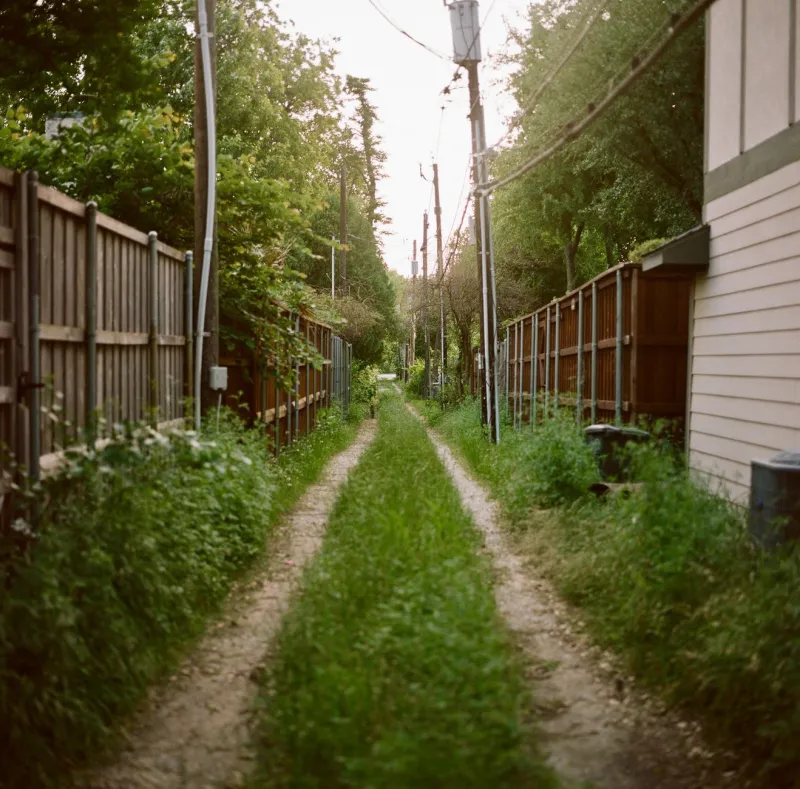
The Quiet Road Ahead: Why Lane-Front and Rural Properties Are Becoming America's Most Coveted Real Estate
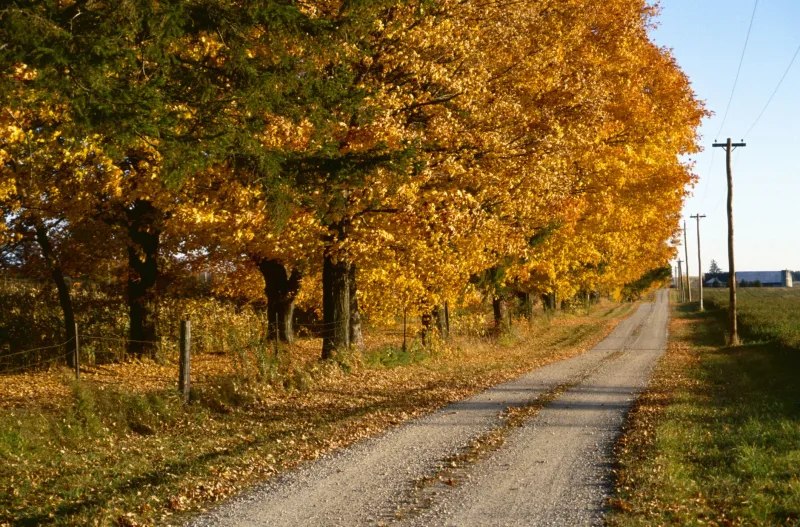
Not long ago, the conventional wisdom in American real estate was straightforward: proximity to urban cores meant premium value, and distance from city centers meant discount pricing. The further you were from the office, the coffee shop, and the cultural amenities of metropolitan life, the less your property was worth — or so the thinking went.
That calculus has been fundamentally disrupted. And for buyers who understand what is happening, the opportunity is significant.
A Demographic Shift That Changed Everything
The pandemic years accelerated a migration pattern that demographers had been tracking, in nascent form, since the mid-2010s. Millennials — now the largest cohort of homebuyers in the United States, according to the National Association of Realtors' 2023 Profile of Home Buyers and Sellers — were already beginning to reconsider the urban premium. Rising rents, shrinking apartments, and the practical demands of family formation were pushing many toward suburban and exurban alternatives.
Then came remote work. Almost overnight, the daily commute — the primary anchor tying residential decisions to urban geography — became optional for millions of knowledge workers. The result was a mass reevaluation of where, exactly, one needed to live.
The data tells a compelling story. According to U.S. Census Bureau migration estimates, rural and semi-rural counties across the Appalachian corridor, the upper Midwest, and the Mountain West recorded net population gains between 2020 and 2023 that reversed decades of outmigration. Small towns and lane-front communities that had been largely overlooked by investors and developers suddenly found themselves at the center of a genuine demand surge.
What Buyers Are Actually Looking For
Speak with buyers who have made the move to a lane-front or rural property in recent years, and certain themes emerge with remarkable consistency.
Space, first and foremost — not merely interior square footage, but the kind of spatial generosity that only comes with land. A yard that functions as an actual yard. A driveway that accommodates more than one vehicle. The absence of shared walls.
Quiet, almost universally. The ambient noise of urban and dense suburban environments — traffic, construction, the perpetual hum of concentrated human activity — takes a toll that many residents don't fully recognize until they no longer have to endure it.
And increasingly, buyers cite something harder to quantify: a sense of groundedness. Properties on named lanes and rural roads carry a character that newer, denser developments rarely replicate. There is a reason that addresses like Hicks Lane evoke something immediate and vivid in the imagination — they suggest a place that has existed long enough to have earned its name.
The Cost-of-Living Advantage: Running the Numbers
Beyond lifestyle considerations, the financial case for lane-front and rural properties is increasingly difficult to ignore.
Consider a straightforward comparison. In a mid-sized northeastern metropolitan area, a three-bedroom, two-bathroom home in a desirable inner-ring suburb currently carries a median listing price in excess of $650,000, according to Zillow's mid-2024 market data. Property taxes in many such jurisdictions run $12,000 to $18,000 annually.
A comparable property — similar square footage, similar lot size, similar construction quality — located forty-five minutes further out on a semi-rural lane can frequently be acquired for $350,000 to $450,000, with annual tax obligations that are meaningfully lower. For a remote worker whose commute is now measured in steps rather than miles, that differential represents tens of thousands of dollars in annual savings, plus the equity advantage of entering a market at an earlier stage of appreciation.
This is not a universally applicable formula — markets vary considerably, and due diligence is always essential. But the structural cost advantage of lane-front and rural properties, relative to their urban counterparts, is real and persistent.
Evaluating a Rural or Semi-Rural Property as a Long-Term Investment
For buyers considering a lane-front property, a rigorous evaluation framework is essential. The following considerations should inform any serious purchase decision.
Infrastructure and connectivity. Broadband internet access is non-negotiable for remote workers. Before placing an offer on any rural property, verify — not merely assume — that reliable high-speed service is available. Fiber-optic expansion programs funded by the Infrastructure Investment and Jobs Act are extending coverage to many previously underserved areas, but gaps remain. Contact the county or township directly, and confirm with the specific internet service providers serving the address.
Municipal services and road maintenance. Understand who maintains the road on which the property sits. A privately maintained lane carries different long-term cost implications than a publicly maintained county road. Request documentation of any road maintenance agreements and assess the condition of the road surface during your site visits across different seasons if possible.
Appreciation trajectory. Examine comparable sales data for the surrounding area over a five- to ten-year window. Look for evidence of consistent demand, even modest appreciation, and low foreclosure or distressed-sale rates. Rural markets that have attracted remote workers and second-home buyers in recent years often show encouraging trend lines.
Community infrastructure. Access to quality schools, healthcare facilities, and essential retail significantly affects both livability and long-term resale value. A property that feels idyllic in isolation but requires a forty-five-minute drive for groceries or medical care may prove less appealing over time — both to you and to future buyers.
Zoning and land use. Rural and semi-rural parcels are frequently subject to agricultural, conservation, or other zoning designations that may affect what you can build, subdivide, or operate on the property. Review the applicable zoning ordinances and consult with a local real estate attorney before closing.
The Lane as Community Anchor
One aspect of lane-front living that buyers frequently discover only after settling in is the community dynamic that a shared address can create. On a named lane, neighbors are not anonymous — they are co-stewards of a shared identity. Block associations, informal road maintenance cooperation, and the simple social ritual of knowing the names of the families down the road are experiences that are increasingly rare in denser residential settings.
This social dimension has measurable value. Studies in community planning consistently link higher social cohesion with lower crime rates, stronger property maintenance norms, and greater long-term residential stability — all factors that support sustained property values.
A Market Moment Worth Taking Seriously
The post-pandemic reconfiguration of American residential preferences is not a temporary anomaly. It reflects durable shifts in how and where a significant portion of the workforce operates, combined with a generational reassessment of what a fulfilling domestic life actually requires.
For buyers positioned to act thoughtfully, lane-front and semi-rural properties represent a genuine convergence of lifestyle value and investment potential. The quiet road, it turns out, leads somewhere quite promising.
At 18 Hicks Lane, we have always believed that the best addresses are the ones that feel like home the moment you hear them. The market, increasingly, is inclined to agree.