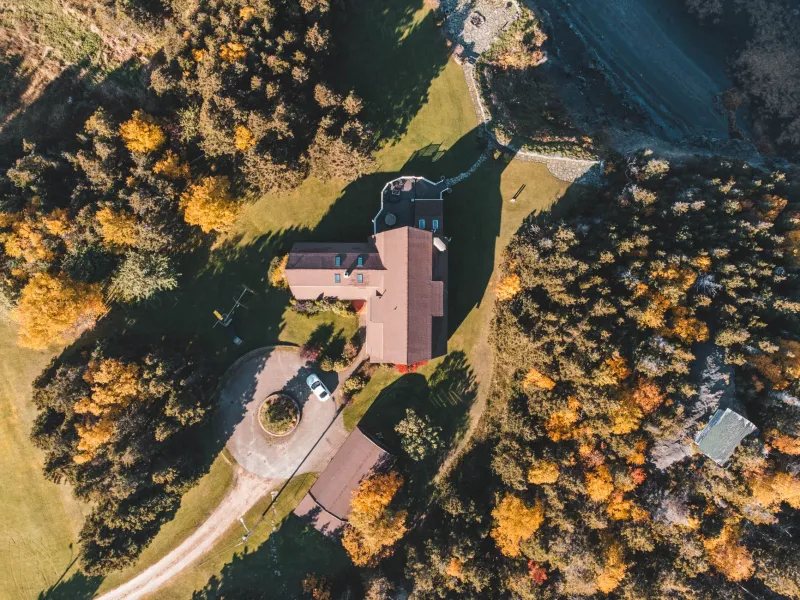
Fewer Neighbors, Higher Prices: The Counterintuitive Economics of Limited-Access Lane Properties
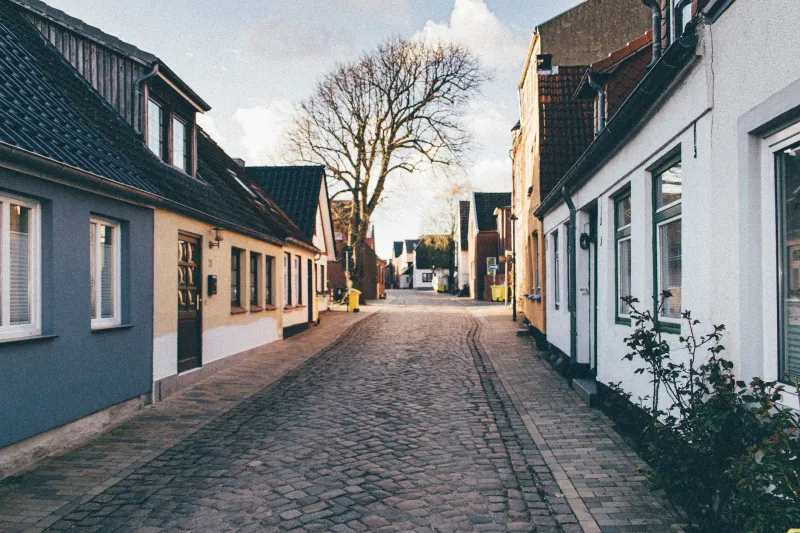
In nearly every conventional real estate conversation, connectivity is treated as an asset. Proximity to highways, walkability scores, transit access — these are the metrics that dominate buyer checklists and appraisal reports. Yet a growing body of market evidence points to a striking counternarrative: properties situated along lanes with limited street access, fewer adjoining neighbors, and reduced through-traffic have been quietly outperforming their more accessible suburban counterparts in both sale price and long-term appreciation. For a property like 18 Hicks Lane, this dynamic is not merely academic — it is the foundation upon which lasting residential value is built.
The Scarcity Principle Applied to Street Access
Economists have long understood that scarcity drives value. In real estate, that principle is most often applied to square footage, lot size, or location within a school district. Rarely is it applied to the nature of the road itself. Lane properties, by definition, occupy a geography that limits the volume of homes that can share the same address corridor. Where a suburban cul-de-sac might house twenty or thirty homes, a true residential lane may serve only a handful of properties. That structural limitation creates an inventory constraint that the broader market cannot easily replicate.
When inventory is constrained and demand remains steady — or grows — prices rise. This is not speculation; it is a pattern that has played out in markets across the American Northeast, the Pacific Northwest, and the Mid-Atlantic region, where lane-front properties in established communities have appreciated at rates measurably higher than comparable homes on standard residential streets. According to data aggregated from multiple county-level assessor records in recent years, homes on named lanes with fewer than ten addresses have, in several suburban-adjacent markets, appreciated between eight and fourteen percent more over a ten-year horizon than homes in the same zip code on conventional streets.
What Buyers Are Actually Paying For
To understand the premium, one must understand what buyers perceive themselves to be purchasing. On the surface, a lane property offers reduced traffic noise, increased visual privacy, and a sense of remove from the density of conventional neighborhood living. These are tangible, measurable attributes. A quieter street means less particulate matter near the home's exterior, reduced wear on driveways and landscaping, and — critically — a meaningfully different daily sensory experience for residents.
Below the surface, however, the psychology runs deeper. Buyers who actively seek lane addresses are frequently motivated by a desire for what real estate professionals term "perceived exclusivity" — the sense that their home occupies a place that not everyone can access, either physically or financially. This perception does not require a gated entrance or a security system. The lane itself, with its narrowed pavement, its canopy of mature trees, and its absence of through-traffic, communicates selectivity in a way that no marketing brochure can fully manufacture.
This psychological premium is well-documented in consumer behavior research. Studies examining residential satisfaction consistently find that homeowners on lower-traffic streets report higher levels of neighborhood attachment and lower rates of regret over their purchase decisions. When sellers eventually list these properties, that emotional investment translates into pricing confidence — and buyers, sensing the authenticity of the setting, are generally willing to meet it.
The Privacy Variable and Its Measurable Impact
Privacy is perhaps the most quantifiable of the lane property's advantages, and it deserves specific attention. In a post-pandemic housing landscape where remote work has permanently altered how Americans relate to their homes, privacy has shifted from a lifestyle preference to a functional necessity. The home office, the outdoor workspace, the extended family gathering — all of these activities are enhanced, and in some cases made possible, by a property that offers genuine separation from the ambient noise and visibility of conventional residential streets.
Real estate appraisers have increasingly begun incorporating privacy metrics into their comparative analyses. While no standardized scoring system has achieved universal adoption, the conversation is evolving. Appraisers in competitive markets have noted that properties with natural buffers — treelines, setbacks, lane configurations — require upward adjustments when compared to otherwise identical homes on busier streets. In practical terms, this means that a four-bedroom home on a lane may legitimately carry a higher appraised value than a structurally identical home two miles away on a standard residential road, even when all other variables are controlled.
Case Study: The Appreciation Gap in Established Lane Communities
Consider the experience of established residential lanes in counties across Virginia, Connecticut, and Oregon — three states where the lane property typology has deep historical roots. In each of these markets, properties along named lanes with limited access points have demonstrated a consistent pattern: slower initial appreciation during the early years of ownership, followed by accelerating gains as the surrounding market matures and buyers become more sophisticated about what they are seeking.
This delayed-then-accelerating curve is significant. It suggests that lane properties are not merely riding broader market waves; they are generating appreciation through a distinct mechanism. As urban and suburban density increases in surrounding areas, the relative scarcity of the lane property becomes more pronounced — and more valuable. The property that felt pleasantly private a decade ago may feel genuinely rare today, and that rarity is priced accordingly.
For sellers, this pattern argues strongly for patience. Lane properties that are held through market cycles tend to reward their owners disproportionately at the point of sale. For buyers, it argues for conviction: paying a modest premium at acquisition is frequently justified by the asymmetric appreciation that follows.
The Resale Narrative and How to Leverage It
When the time comes to sell a lane property, the marketing narrative writes itself — provided the seller understands how to frame it. The limited-access setting is not a liability to be apologized for; it is the central value proposition. Buyers who are actively searching for lane properties are not casually browsing; they are purposeful, pre-qualified, and emotionally motivated. They have already rejected the conventional alternatives.
This buyer profile tends to produce faster closings, fewer contingencies, and stronger offers relative to list price. In markets where days-on-market is a closely watched metric, lane properties listed with accurate, confident pricing frequently outperform neighborhood averages — not because they attract more buyers, but because they attract the right ones.
At 18 Hicks Lane, this principle is not theoretical. It is the lived experience of a property that occupies precisely the kind of address that the market has quietly, consistently, and increasingly rewarded. The lane is not an obstacle to value. It is the source of it.
A Final Word on Long-Term Strategy
For those evaluating a lane property purchase as part of a broader real estate strategy, the evidence is clear: limited access is not a compromise. It is a competitive advantage. In a housing market defined by sameness — subdivision after subdivision of nearly identical homes on interchangeable streets — the lane property stands apart. That distinction, compounded over years of ownership, is precisely what drives the premiums that continue to surprise analysts who have not yet learned to look beyond the conventional metrics.
The quiet road, it turns out, leads somewhere quite valuable.