Timing the Market by the Calendar: How Lane Properties Shift in Character—and Value—Across Every Season
Most real estate guidance treats seasonality as a simple supply-and-demand curve: inventory tightens in winter, buyers flood the market in spring, and sellers are advised to list accordingly. That framework is useful as far as it goes. But for properties situated along named lanes and rural corridors—addresses like those found along Hicks Lane—it misses something fundamental.
Lane properties do not merely respond to market seasonality. They generate their own. The land itself changes across the calendar year in ways that alter the experience of living there, the visual appeal of the property, and the emotional response of buyers who walk the grounds on a showing. For the well-prepared seller, that seasonal transformation is not something to work around—it is something to work with.
Spring: When the Lane Sells Itself
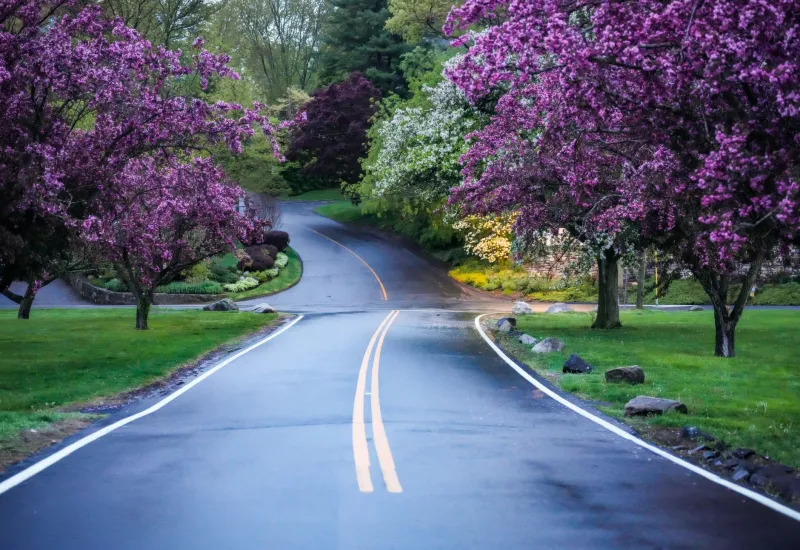
There is perhaps no more persuasive listing tool available to a lane property owner than a genuine spring bloom. Along established rural and suburban lanes, the warming weeks of March through May produce a cascade of visual appeal that no staging company can replicate: flowering dogwoods arching over gravel drives, wildflower margins along fence lines, the return of birdsong that makes outdoor spaces feel inhabited and alive.
For properties along well-established lanes, spring curb appeal is not simply cosmetic. It is revelatory. Buyers who tour a lane property in early spring are, in effect, previewing the land at its most expressive. The mature plantings, the naturalized borders, the canopy beginning to close overhead—these features announce themselves without any assistance from the seller. A buyer standing at the end of a lane driveway in April, watching light filter through budding maples, is experiencing the property in a way that a floor plan or virtual tour cannot communicate.
Practically speaking, spring listings on lane properties tend to benefit from this organic staging effect. Sellers who time their listing launch to coincide with peak bloom—typically late April through mid-May across much of the continental United States—often report stronger initial showing traffic and reduced time on market. The land, in essence, does the selling.
Summer: Lifestyle in Full Expression
If spring is the season of promise, summer is the season of proof. Long days, accessible outdoor spaces, and the full canopy of a mature landscape allow buyers to envision the lifestyle a lane property genuinely supports.
For families with children, summer showings offer something invaluable: the sight of space. A lane property in July communicates freedom—room to run, to garden, to host gatherings on a shaded porch without the ambient noise of dense neighborhoods. The privacy that a lane address provides becomes viscerally apparent when a buyer can stand in a backyard and hear only wind and birds rather than neighboring conversations and street traffic.
Summer is also the season when lane properties tend to attract the most out-of-market buyers. Weekend visitors exploring rural and exurban areas during vacation travel frequently encounter properties that capture their imagination. A well-maintained lane home passed on a Saturday afternoon drive can initiate a buying conversation that concludes months later. Sellers who maintain strong curb presence through the summer months—keeping drives tidy, borders managed, and exteriors in excellent condition—position themselves to capture this unpredictable but often highly motivated buyer segment.
Fall: The Season That Closes Deals
Autumn is, for many lane property owners, the most dramatic season of the year—and it may also be the most strategically valuable for sellers willing to move against conventional wisdom.
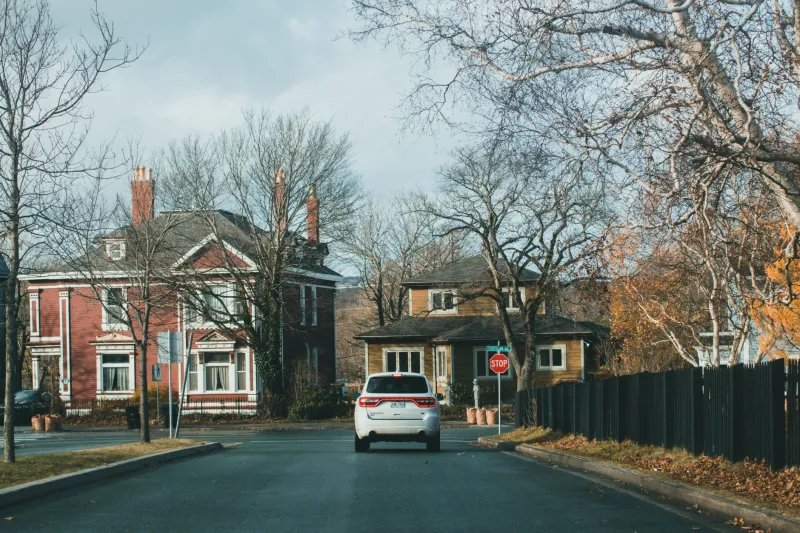
The conventional real estate calendar discourages fall listings, citing declining buyer pools and the approach of the slower winter market. For lane properties in regions with meaningful fall foliage—across New England, the Mid-Atlantic, the Midwest, and much of the Mountain West—this advice deserves serious reconsideration. A lane lined with mature hardwoods in October is a fundamentally different visual proposition than it is in June. The color, the warmth, the sense of enclosure created by autumn canopy—these qualities speak directly to buyers seeking sanctuary.
Fall also tends to attract a specific and highly motivated buyer demographic: those approaching retirement or already there. Buyers in this cohort are frequently less constrained by school-year calendars and more attuned to the aesthetic and emotional qualities of a property. They are often pre-qualified, decisive, and drawn to exactly the kind of seasonal character that a fall lane showing can provide in abundance.
Sellers who list in September or October, when foliage is near its peak, can leverage photographs and showing experiences that carry genuine emotional resonance. The key is preparation: ensuring that the property itself is in pristine condition so that the natural drama of the season is not undermined by deferred maintenance.
Winter: The Underrated Selling Season for the Right Buyer
Winter on a lane property is not for everyone—and that is precisely the point. The buyers who tour a lane property in January or February, navigating a quiet snow-covered drive to reach a well-lit home with smoke curling from the chimney, are self-selected. They are not casual browsers. They are serious.
For sellers who must list in winter, lane properties carry advantages that urban and suburban alternatives cannot match. The peace of a snowy lane morning, the visibility of mature tree structure against a winter sky, the warmth of a home that clearly manages the season well—these qualities resonate deeply with buyers for whom solitude and self-sufficiency are genuine priorities.
Retirees, in particular, are a significant winter buyer segment for lane properties. Many are relocating from regions with harsher climates, or downsizing from larger family homes, and they bring both financial readiness and a clear sense of what they want. A lane property that demonstrates graceful winter livability—good road access, reliable utilities, a warm and well-maintained interior—can close efficiently with this audience even in the quietest months of the real estate calendar.
Reading Your Lane's Natural Calendar
The strategic implication of all of this is straightforward, if underappreciated: the best time to list a lane property is not determined solely by market conditions. It is determined by the intersection of market conditions and the property's own seasonal peak.
A seller who understands when their lane is at its most visually compelling, and who plans their listing timeline accordingly, is not simply following the market—they are leveraging a natural asset that most properties simply do not possess. At 18 Hicks Lane, that asset is built into the address itself. The land has a rhythm. The wisest sellers learn to move with it.