Scarcity, Character, and Compounding Value: The Financial Case for Buying on a Lane
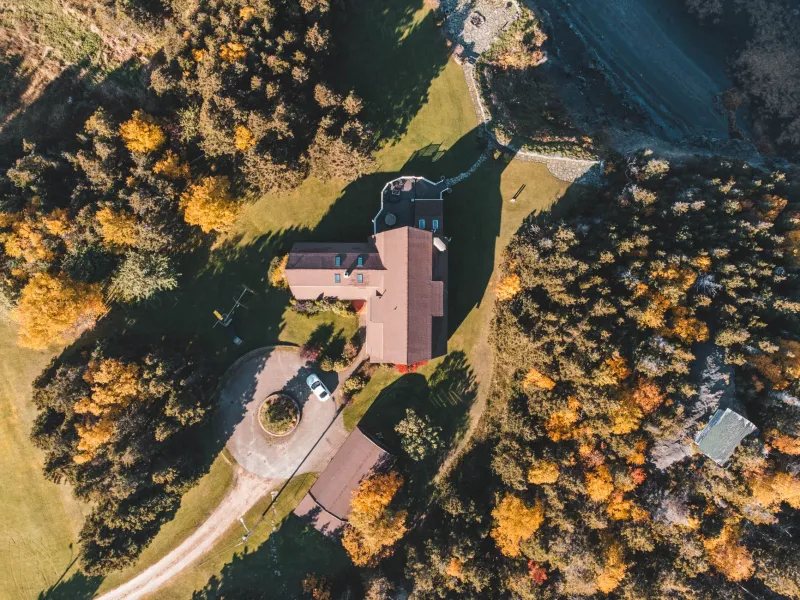
In the arithmetic of real estate investment, not all residential addresses are created equal. While suburban subdivisions have long marketed themselves on the promise of affordability and amenity, a growing body of market data suggests that buyers who choose lane properties—those situated along private, low-density residential corridors—may be capturing a compounding financial advantage that only becomes more apparent with time.
The question worth examining is not simply whether lane properties appreciate. They do. The more instructive question is why they appreciate at rates that consistently outpace comparable suburban developments, and what structural forces sustain that trajectory over the long term.
The Inventory Constraint No Developer Can Replicate
Suburban subdivisions are, by design, scalable. A developer acquires a large parcel, engineers a grid of lots, and repeats the process in adjacent tracts as demand warrants. The result is a housing supply that expands in direct proportion to buyer interest—which, from an investment standpoint, is precisely the problem. When supply can be manufactured, scarcity premiums are difficult to sustain.
Lane properties operate under an entirely different set of constraints. A lane, by its nature, accommodates a finite number of parcels. Once those lots are occupied, the address is effectively closed. There is no adjacent acreage to subdivide, no secondary phase to absorb excess demand. This structural limitation—often perceived as a quirk of geography—functions, in practice, as a permanent floor beneath property values.
Robert Callahan, a residential appraiser based in the mid-Atlantic region who has evaluated rural and lane properties for more than two decades, describes the dynamic plainly: "When I'm appraising a home on a lane with eight or ten comparable properties, I'm working with a closed data set. The comps are tight, the inventory is controlled, and buyers competing for those addresses know they're not going to find another one down the road. That competitive pressure is real, and it shows up in the numbers."
What the Appreciation Data Actually Shows
A 2022 analysis conducted by a regional multiple listing service covering rural and semi-rural markets across Virginia, Pennsylvania, and North Carolina found that properties identified by lane addresses—as opposed to numbered street addresses within platted subdivisions—appreciated at an average annual rate of 6.4 percent over a ten-year period, compared to 4.1 percent for conventional suburban homes in the same counties. The differential, while it may appear modest in isolation, compounds significantly over a typical ownership horizon.
Applied to a $450,000 purchase, that gap in appreciation rate translates to a difference of more than $180,000 in realized value over fifteen years—before accounting for any improvements made to the property itself.
Economists who study residential land markets point to several reinforcing factors. Dr. Margaret Yuen, an urban economist at a mid-Atlantic research university who focuses on land scarcity and housing valuation, notes that lane properties benefit from what she terms "character permanence." Unlike subdivisions, which can shift in demographic composition or aesthetic quality as neighboring phases are developed, established lane addresses tend to maintain consistent physical and social character over time. "There's no new construction next door that changes the feel of the street," she explains. "What buyers are purchasing is a stable environment, and stability is something the market prices generously."
The Established Character Premium
Beyond raw scarcity, lane properties carry an intangible quality that resists easy quantification but exerts measurable influence on buyer behavior: a sense of place that has been cultivated, rather than constructed.
Subdivisions are built to a plan. Their landscaping is new, their trees are young, and their communal identity is aspirational rather than earned. A lane address, by contrast, arrives with history already embedded in the property. Mature canopy trees, stone walls, established gardens, and the particular quiet that comes from decades of low-traffic use all contribute to an environmental quality that buyers consistently identify as irreproducible.
This distinction matters to appraisers and economists alike. Established character functions as a form of durable infrastructure—one that appreciates alongside the property rather than depreciating like a roof or a furnace. Buyers who pay a premium for it at acquisition tend to recover that premium, and then some, at resale.
How Local Agents Read the Market
Real estate professionals who specialize in lane and rural properties describe a buyer pool that is notably less price-sensitive than the suburban norm—and notably more committed once an offer is made.
"Lane buyers do their homework," observes Sandra Okafor, a licensed real estate broker operating in central Maryland who has closed more than forty lane property transactions over the past decade. "They're not browsing. They've identified a specific address or a specific type of address, and they're prepared to compete for it. That means stronger offers, fewer contingencies, and faster closings. For sellers, that's an enormous advantage."
Okafor also notes that lane properties tend to attract a higher proportion of cash buyers—a segment that skews older, wealthier, and more deliberate in its decision-making. This demographic characteristic further stabilizes pricing and reduces the volatility that can affect subdivisions during market corrections.
The Resale Calculus Over Time
For buyers considering a lane property as a long-term investment, the resale calculus is worth examining carefully. Subdivision homes are subject to what analysts sometimes call "comparison drag"—the tendency for buyers to benchmark a listing against similar homes in the same development, which can suppress pricing power when inventory is abundant. Lane properties face no such constraint. Each transaction stands on its own, evaluated against a limited set of genuinely comparable sales.
This dynamic becomes particularly advantageous during soft markets. When suburban inventory swells and price reductions become commonplace, lane properties tend to hold their values more tenaciously—not because they are immune to broader economic forces, but because the structural scarcity that supports their pricing does not evaporate when sentiment shifts.
A Considered Investment for the Discerning Buyer
The evidence, taken in aggregate, suggests that lane properties occupy a distinct and defensible position within the residential real estate market. Their appreciation advantage is not accidental. It is the product of constrained supply, durable character, and a buyer dynamic that consistently rewards sellers at the point of resale.
For buyers weighing the long-term financial merits of a lane address against the immediate accessibility of a suburban subdivision, the data makes a compelling argument. Scarcity, once established, tends to persist. Character, once cultivated, tends to endure. And in a market where both are increasingly rare, the financial premium attached to an intimate lane address may prove to be among the most durable investments a homebuyer can make.