From the Corner Office to the Back Forty: Why Remote Professionals Are Choosing Lane Addresses as Their Permanent Headquarters

Marissa Chen spent eleven years commuting forty-five minutes each way into downtown Chicago. When her employer shifted to a fully remote model in 2021, she did what an increasing number of professionals across the country did: she reconsidered everything. Within eight months, she and her husband had sold their Naperville townhome and purchased a four-bedroom property on a private lane in rural Wisconsin — complete with a detached studio that now serves as her dedicated design consultancy office.
"I used to think location meant proximity to the office," she says. "Now location means a view worth looking at between calls, a space that doesn't bleed into the rest of my life, and an internet connection that doesn't drop during a client presentation."
Marissa's story is neither unique nor accidental. It reflects a structural shift in how Americans define the relationship between where they work and where they live — a shift that is actively reshaping demand in the residential real estate market, and one that has placed lane and rural properties at the center of a conversation they were rarely invited into before.
The New Geography of Work
The numbers tell a clear story. According to data from the Bureau of Labor Statistics and multiple workforce surveys conducted since 2020, the share of Americans working remotely on either a full-time or hybrid basis has stabilized at levels dramatically higher than pre-pandemic norms. Technology, finance, consulting, healthcare administration, marketing, and education sectors have all seen sustained remote and hybrid arrangements become standard operating procedure rather than temporary accommodation.
For real estate, the implications are significant. When the office is wherever you open your laptop, the calculus of home selection changes entirely. Square footage dedicated to work becomes a primary criterion. Acoustic separation from household activity matters. Outdoor space — once a lifestyle amenity — becomes a mental health infrastructure. And the quiet that a lane address provides, long considered a passive virtue, becomes an active professional asset.
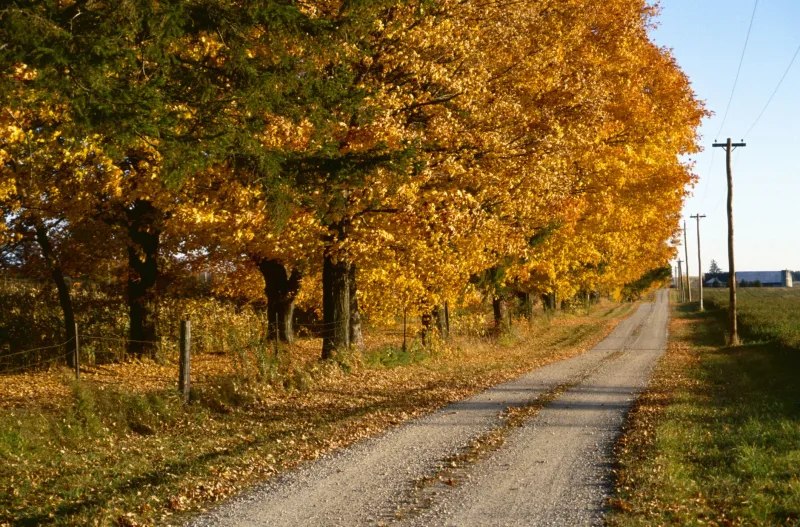
Buyers who would have dismissed a property forty minutes from the nearest commercial district are now actively seeking that distance. The lane, the gravel drive, the absence of through-traffic — these features, once considered trade-offs, are being reframed as specifications.
What Remote Workers Are Actually Looking For
Conversations with remote professionals who have relocated to lane properties over the past three years reveal a remarkably consistent set of priorities that diverge meaningfully from the traditional home-buyer checklist.
Dedicated, separated workspace. The single most commonly cited requirement is a home office that is physically distinct from living areas. This does not necessarily mean a detached structure, though those command considerable premiums. It means a room with a door, ideally with its own exterior entrance, positioned away from the primary activity zones of the home. Lane properties, which tend to offer more generous square footage and flexible floor plans than suburban counterparts at comparable price points, frequently satisfy this requirement naturally.
David Okafor, a cybersecurity consultant who relocated from Northern Virginia to a lane property in the Shenandoah Valley, describes his criteria bluntly: "I needed a room where I could close the door and not hear my kids, not see the laundry, and not be interrupted. I also needed natural light, because I'm on video calls six hours a day. The property we found had a room off the back of the house with windows on three sides. That room sold us on the entire property."
Reliable broadband connectivity. This is the question that stops more lane-property transactions than any other single factor, and rightly so. Rural internet infrastructure in the United States has historically lagged behind suburban and urban markets. However, the landscape is changing with considerable speed.
Federal investment through the Infrastructure Investment and Jobs Act has directed billions of dollars toward rural broadband expansion. Starlink and competing low-earth-orbit satellite internet services have transformed connectivity options for properties that fall outside the reach of fiber or cable networks. Many lane-property markets that were effectively off-limits to remote workers five years ago are now fully viable.
That said, buyers must conduct thorough due diligence. Before making an offer on any lane property, verify available service providers, confirm actual delivered speeds (not advertised maximums), and inquire about reliability during severe weather. Speaking with current residents in the area — rather than relying solely on carrier coverage maps — remains the most reliable method of assessment.
Utility reliability and backup systems. Related to connectivity is the broader question of utility resilience. Lane and rural properties are statistically more susceptible to power outages during storms, and a power interruption that inconveniences a suburban household becomes a professional crisis for a remote worker mid-deadline. Savvy buyers in this category are evaluating properties with an eye toward generator infrastructure, solar installations with battery backup, and the general condition of utility service to the parcel. Sellers who have invested in these systems are finding them to be meaningful differentiators in a competitive market.
The Premium That Dedicated Office Space Commands
From a market-value perspective, the impact of purpose-built home office space on lane properties has become increasingly quantifiable. Appraisers and real estate professionals in markets with high concentrations of remote workers report that dedicated office rooms — particularly those with separate entrances, soundproofing, or detached structure configurations — are contributing measurable premiums to asking prices and, more importantly, to final sale prices.
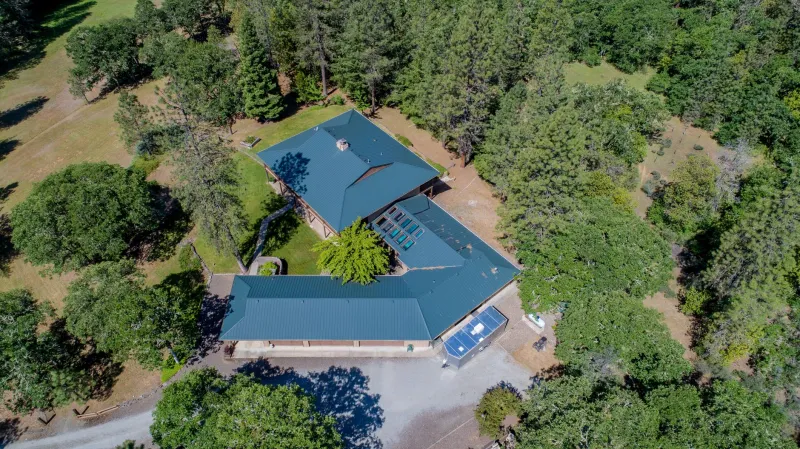
Detached structures such as converted barns, purpose-built garden offices, or renovated outbuildings that function as professional workspaces represent perhaps the most compelling value-add in this category. These structures provide the physical and psychological separation that remote workers prize, while also offering flexibility — a space that functions as an office today may serve as a studio, guest quarters, or rental unit tomorrow.
For buyers considering a lane property with this use case in mind, the investment calculus extends beyond the purchase price. A property that requires a $30,000 office conversion may still represent better long-term value than a comparable property already configured for remote work, depending on market conditions. Consulting with a local contractor and a real estate professional familiar with the specific market will clarify which scenario makes financial sense.
The Intangible Productivity Dividend
Sarah Tillman, a freelance technical writer who moved from suburban Atlanta to a lane property in North Georgia three years ago, offers a perspective that resists easy quantification but resonates with nearly every remote worker who has made a similar transition.
"People ask me if I miss the city," she says. "I miss certain restaurants. I do not miss the noise, the interruptions, or the feeling that I was always slightly distracted. Out here, when I sit down to work, I actually work. My output has increased. My stress has decreased. And when I look up from my desk, I see a pasture and a tree line instead of a parking lot."
This quality of focused attention — what cognitive scientists sometimes describe as the restorative function of natural environments — is not a soft benefit. It is a professional competitive advantage. And for the growing population of remote workers who have experienced it firsthand, it is among the most persuasive arguments for choosing a lane address as their permanent professional home.
At 18 Hicks Lane, the proposition has always been that the right address changes more than your commute. For remote professionals, it may change the trajectory of your career.