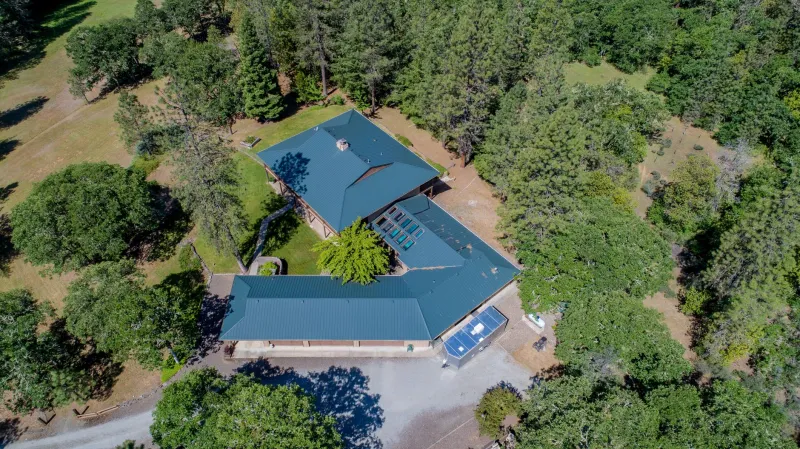
The True Cost of Convenience: How a Quiet Lane Address Can Strengthen Your Financial Future

When prospective buyers weigh a move to a property like those found along a quiet residential lane, the conversation almost always gravitates toward lifestyle. The birdsong in the morning. The absence of through-traffic. The sense that your home is genuinely yours. What rarely enters that conversation early enough is money — and specifically, how much of it a lane address can help you keep.
The financial calculus of where you live extends well beyond your monthly mortgage payment. It encompasses insurance, transportation, property taxation, and even the subtle behavioral economics of your daily environment. Taken together, these factors paint a picture that budget-conscious families should examine carefully before assuming that proximity to amenities is always worth the premium.
Insurance Premiums: Location Is Everything to Your Carrier
Homeowners insurance is one of the most location-sensitive expenses in your housing budget, yet it receives surprisingly little attention during the buying process. Insurers assess risk based on a constellation of factors, and your street address sits near the top of that list.
Properties situated on low-traffic lanes consistently benefit from reduced risk profiles in several categories. Theft and vandalism claims are statistically lower in areas with limited through-traffic, simply because opportunistic crime requires opportunity. When fewer vehicles and unfamiliar faces pass your property daily, your insurer takes note.
Fire risk assessments also tend to favor rural and semi-rural lane properties in states where fire departments operate on a volunteer or district model, provided the home meets basic safety standards. In densely populated suburban corridors, the inverse can apply — older infrastructure, aging electrical grids, and proximity to commercial properties can elevate premiums considerably.
According to data from the Insurance Information Institute, homeowners in lower-density zip codes frequently pay measurably less annually for comparable coverage than their urban counterparts. Over a 30-year mortgage, that differential can compound into tens of thousands of dollars.
Your Vehicles Will Thank You — and So Will Your Wallet
One of the most underappreciated financial advantages of lane living is what it does to your vehicles. Urban and high-traffic suburban driving is punishing. Stop-and-go commutes accelerate brake wear, strain transmissions, and reduce fuel efficiency in ways that accumulate silently until a service estimate delivers the news.
Residents of quieter lane communities frequently report longer intervals between major vehicle maintenance events. Steady-speed driving on rural or low-traffic roads is genuinely easier on mechanical components. Tire wear patterns improve. Brake pads last longer. Fuel consumption per mile decreases meaningfully when your daily driving involves fewer traffic signals and less idling.
For a household operating two vehicles — which describes the majority of American families — these savings can easily reach $1,000 to $2,500 annually when totaled across fuel, maintenance, and extended vehicle lifespan. That figure rarely appears in any rent-versus-buy or urban-versus-suburban comparison, but it belongs in every honest financial conversation.
The Impulse Spending Effect: When Distance Creates Discipline
Behavioral economists have long understood that proximity drives consumption. When a coffee shop, a boutique, or a restaurant is a three-minute walk from your front door, your spending reflects that access. The convenience economy is built on reducing the friction between desire and purchase — and it is extraordinarily effective.
Lane living introduces healthy friction. When a discretionary purchase requires genuine planning — a drive, a deliberate decision — the impulse has time to dissipate. Many families who relocate from urban centers to quieter residential addresses report a natural and largely painless reduction in discretionary spending within the first year. This is not deprivation; it is simply the financial benefit of distance from commercial density.
This effect is particularly pronounced for households with children. The neighborhood ice cream shop and the convenience store that anchors the corner of a busy suburban intersection are engineered for impulse. A lane address replaces those triggers with a backyard, a garden, or a trail — amenities that enrich daily life without generating a receipt.
Property Tax Comparisons: Reading Between the Mill Rate Lines
Property taxation is a genuinely complex subject that varies significantly by state, county, and municipality. However, a consistent pattern emerges when comparing lane and rural properties against their urban and dense-suburban counterparts: assessed values per square foot tend to be lower, and in many jurisdictions, the effective tax rate follows suit.
In states such as Tennessee, Missouri, and North Carolina — all of which have seen significant domestic migration in recent years — rural and semi-rural residential properties offer assessed valuations that can be dramatically lower than comparable square footage in a major metropolitan area. A 2,400-square-foot home on a lane outside Asheville, for example, may carry an assessed value and corresponding tax burden that simply cannot be replicated inside city limits.
Buyers should always consult a local tax professional and review the specific mill rates for any property under consideration. That said, the directional truth holds: lane and rural properties frequently deliver more home for the tax dollar than their urban equivalents.
Building Equity in a Less Competitive Market
Finally, there is the question of what your investment does over time. Lane-front properties in desirable areas — particularly those with natural features, mature landscaping, or proximity to growing smaller cities — have demonstrated meaningful appreciation in recent years. As remote work has restructured where Americans choose to live, demand for properties that offer space, privacy, and a slower pace has increased substantially.
The financial benefits of lane living are not merely about spending less. They are about building more — more equity, more savings, and more of the breathing room that allows families to make sound long-term decisions.
At 18 Hicks Lane, we believe the right address is one that works as hard for your financial future as it does for your quality of life. Sometimes, the smartest move is the one that takes you off the main road entirely.