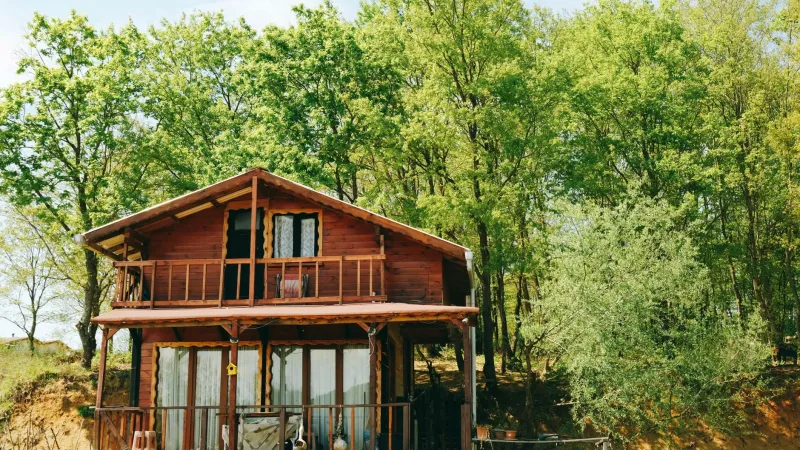
Where the Wild Things Roam: How Natural Corridors Along Lane Properties Drive Lasting Value

There is a particular kind of morning that lane-property owners know well. A white-tailed deer pauses at the tree line. A red-tailed hawk circles overhead. The air carries the faint rustle of something moving through tall grass just beyond the fence post. These are not incidental pleasures — they are, increasingly, measurable assets.
Across the United States, a growing body of research and a shifting buyer demographic are converging on a single conclusion: residential properties that sit adjacent to or within natural wildlife corridors carry environmental, psychological, and financial advantages that conventional suburban lots simply cannot replicate. For prospective buyers considering a lane address, understanding what a wildlife corridor is — and what it means for your investment — may be one of the most important due-diligence steps you take.
What Is a Wildlife Corridor, and Why Should Homebuyers Care?
A wildlife corridor is a strip or network of natural habitat that connects otherwise fragmented ecosystems, allowing animals to move freely between larger tracts of undeveloped land. These corridors might follow a stream bed, a wooded ridgeline, a meadow edge, or even a hedgerow-lined lane. Their ecological function is critical: they sustain genetic diversity among wildlife populations, support pollinator movement essential to plant reproduction, and provide refuge during seasonal migration.
For the homebuyer, the relevance is immediate and practical. Properties that border or intersect these corridors tend to enjoy several characteristics that translate directly into residential appeal: mature tree canopy, natural buffers against noise and development, and the kind of biodiversity that makes a landscape feel alive rather than managed.
Lane-front properties, by their very geography, are frequently positioned at the interface between the built and natural worlds. A private lane often meanders through terrain that was never economically practical to develop — a hillside, a floodplain edge, a stretch of second-growth forest. That same terrain is precisely what wildlife needs.
The Buffer Effect: Protection Against Sprawl
One of the most tangible financial benefits of corridor-adjacent properties is what real estate professionals sometimes call the buffer effect. When a lane property abuts protected woodland, a conservation easement, or a designated wildlife management area, the probability of dense residential or commercial development appearing on that border diminishes substantially.
In markets across the Mid-Atlantic, the Midwest, and the Pacific Northwest, studies have consistently demonstrated that homes bordering permanently protected open space command price premiums ranging from eight to twenty percent compared with otherwise comparable properties without that adjacency. The logic is straightforward: scarcity commands value. As suburban expansion continues to consume undeveloped land, the parcels that maintain a natural edge become rarer and, correspondingly, more desirable.
At 18 Hicks Lane, this principle is not abstract. Properties along quiet, tree-canopied lanes frequently benefit from exactly this dynamic — the lane itself acts as a transitional zone, preserving the character of the surrounding landscape in ways that a standard subdivision street never could.
Biodiversity as a Selling Point
The modern buyer, particularly among millennials and Generation X households relocating from urban centers, increasingly evaluates a property through an environmental lens. Proximity to birding opportunities, the presence of native pollinators, and visible wildlife activity have moved from novelty to priority on many buyers' checklists.
Real estate listing platforms have noted a measurable uptick in searches filtered by terms such as "wooded lot," "nature views," and "wildlife habitat" over the past several years. Sellers who can substantiate these qualities — through documented species sightings, proximity to Audubon-recognized habitats, or land that qualifies for conservation programs — are finding that these details accelerate sales timelines and support higher asking prices.
For the ecologically minded buyer, a lane property within or adjacent to a wildlife corridor is not merely a home. It is a stewardship opportunity. Many such owners participate voluntarily in habitat enhancement programs offered through state wildlife agencies or organizations such as the National Wildlife Federation, which allows properties to be certified as official wildlife habitats. This designation carries both personal meaning and, in many markets, documented appeal to subsequent buyers.
Practical Considerations: What to Evaluate Before You Buy
Not every lane property with trees constitutes a genuine wildlife corridor. Discerning buyers should approach the evaluation methodically.
Review land-use maps and conservation data. Most state environmental agencies and county planning offices maintain publicly accessible GIS data identifying protected parcels, wetland buffers, and designated wildlife management areas. Confirm that the natural features adjacent to a property of interest carry some form of protection against future development.
Consult local conservation organizations. Regional land trusts and wildlife advocacy groups often have detailed knowledge of active corridors in specific townships. A brief conversation with a local naturalist or land trust representative can reveal whether a property sits within a recognized migration route or pollinator pathway.
Assess water features carefully. Streams, ponds, and wetland edges are among the most biodiverse habitats in North America and frequently anchor corridor networks. A property with frontage on a healthy waterway is almost always positioned within an active corridor — and benefits accordingly.
Understand the covenants. Some corridor-adjacent properties are encumbered by conservation easements that restrict certain uses. While this may initially appear limiting, easements are increasingly viewed by sophisticated buyers as a guarantee of long-term environmental integrity — and the tax advantages they sometimes confer can be substantial.
The Quality-of-Life Dividend
Beyond the investment calculus, there is something more difficult to quantify but no less real: what it means to live within a landscape that breathes. Environmental psychology research has documented the restorative effects of regular contact with natural systems — reduced cortisol levels, improved attention, greater reported life satisfaction. A lane property that delivers morning deer sightings, evening firefly displays, and the seasonal theater of migratory songbirds is providing something that no urban amenity package can replicate.
For buyers who have spent years in congested suburbs or dense urban environments, the wildlife corridor effect is not a footnote in a property's description. It is the headline.
At 18 Hicks Lane, the conviction has always been that the most enduring real estate investments are those that honor the landscape they inhabit. A property positioned within a living corridor — where nature moves freely, seasons are felt rather than observed through glass, and the land retains its essential character — is precisely that kind of investment. The wildlife is not a bonus feature. It is a signal that something irreplaceable has been preserved.